The best t-shirt printing method is the one that matches the artwork, the fabric, the order size, and the finish the customer expects to feel. A detailed illustration, a sharp logo, a full-shirt pattern, and a stitched chest mark do not belong in the same production bucket. Each technique changes color clarity, texture, durability, price, and the way the garment moves on the body.
This guide explains the five t-shirt printing methods most custom apparel buyers compare: direct-to-garment printing, direct-to-film printing, screen printing, embroidery, and all-over print. It is written for store owners, creators, teams, gift buyers, and anyone preparing a custom t-shirt collection who wants a practical answer instead of a production glossary.
If you only need a quick rule, use this: DTG is usually best for soft detailed cotton prints, DTF is strong for crisp graphics across varied fabrics, screen printing is reliable for bold repeat designs at volume, embroidery is best for small premium details, and all-over print is for patterns or full-garment artwork. The rest of the article shows when that simple rule needs adjustment.
| Method | Best for | Main trade-off |
|---|---|---|
| DTG | Detailed art, photos, gradients, small cotton runs | Best on smooth cotton; not always ideal for every synthetic blend |
| DTF | Crisp graphics, varied fabrics, colorful small batches | Slightly more transfer feel than a soft ink print |
| Screen printing | Bold artwork, repeat designs, larger quantities | Setup is less efficient for tiny runs or many colors |
| Embroidery | Small premium logos, initials, minimal marks | Large stitched areas can feel stiff on light shirts |
| All-over print | Patterns, full-garment fashion pieces, statement designs | Requires artwork built for seams, panels, and bleed |
What changes from one printing method to another?
A print method is not just a way to place color on fabric. It controls how the artwork bonds to the garment, how thick the decoration feels, how well small details survive washing, and how predictable the result is across sizes. Two shirts can use the same artwork file and still feel completely different if one is printed with water-based ink and the other uses a transfer film.
The most important variables are artwork detail, color count, fabric fiber, garment weight, print placement, order quantity, and customer expectation. A soft lifestyle shirt for everyday wear needs a different balance than a staff uniform, a team shirt, a fashion drop, or a gift hoodie. That is why the question is rarely “which method is best?” The better question is “best for which product?”
When a product page explains the method clearly, customers understand why one design looks soft and tonal while another looks bold and graphic. That improves trust, reduces disappointment, and gives search engines more useful context around the product category. For Artsalan, method education also supports the store promise of personalized clothing that looks intentional rather than generic.
Direct-to-garment printing: best for detailed cotton artwork
Direct-to-garment printing, usually shortened to DTG, works like a specialized inkjet process for garments. The shirt is held flat, and water-based ink is printed directly onto the fabric. Because the ink can reproduce many tones, DTG is a strong choice for illustrations, digital artwork, photo-style designs, gradients, shadows, and designs with more colors than would be practical in screen printing.
DTG usually feels soft on cotton because the ink becomes part of the fabric surface instead of creating a thick layer above it. That comfort makes it useful for fashion basics, small runs, one-off gifts, and print-on-demand products where every order may have a different design. If your custom t-shirt collection depends on expressive artwork rather than a limited logo mark, DTG deserves early consideration.
The limitation is that DTG is not automatically ideal for every shirt. It performs best when the garment is smooth and cotton-rich. Very textured fabrics, some synthetic blends, and dark shirts with heavy underbase layers can change the final feel. For best results, the artwork should be prepared at the right size, the shirt should be pretreated correctly when needed, and the print should be cured according to the production workflow.
Use DTG when the design needs subtle color movement, small artistic details, or a softer everyday feel. Avoid it when the brief calls for a thick raised finish, a tiny embroidered logo, or a very large bulk order where a simple one-color design can be produced more efficiently by screen printing.
Direct-to-film printing: versatile for crisp graphics and mixed fabrics
Direct-to-film printing, often called DTF, prints the design onto a transfer film, adds adhesive powder, cures the transfer, and heat presses it onto the garment. The result can be vivid, crisp, and durable across a wide range of garment types. This makes DTF attractive for small batches, mixed apparel orders, fleece, blends, and designs that need consistent color on different base fabrics.
The main strength of DTF is versatility. A brand can use one artwork system across t-shirts, hoodies, tote bags, and other items without rebuilding everything for each surface. Fine text, strong outlines, saturated color, and high-contrast graphics often hold up well. For creators who sell designs on multiple products, that flexibility can be more important than the absolute softest hand feel.
DTF does have a different texture from DTG. Because the design is transferred as a film-backed decoration, customers may notice a slightly more structured surface, especially on larger solid areas. That is not necessarily a problem; many customers prefer the crisp, saturated look. The key is to use it intentionally and avoid oversized blocks that feel heavier than the garment warrants.
Choose DTF when the artwork needs sharp edges, when the fabric mix is uncertain, or when a design must work across several product types. It is especially useful for custom t-shirts with bold lettering, small logos, colorful graphics, and designs that will be reordered in flexible quantities.
Screen printing: the classic choice for bold repeat designs
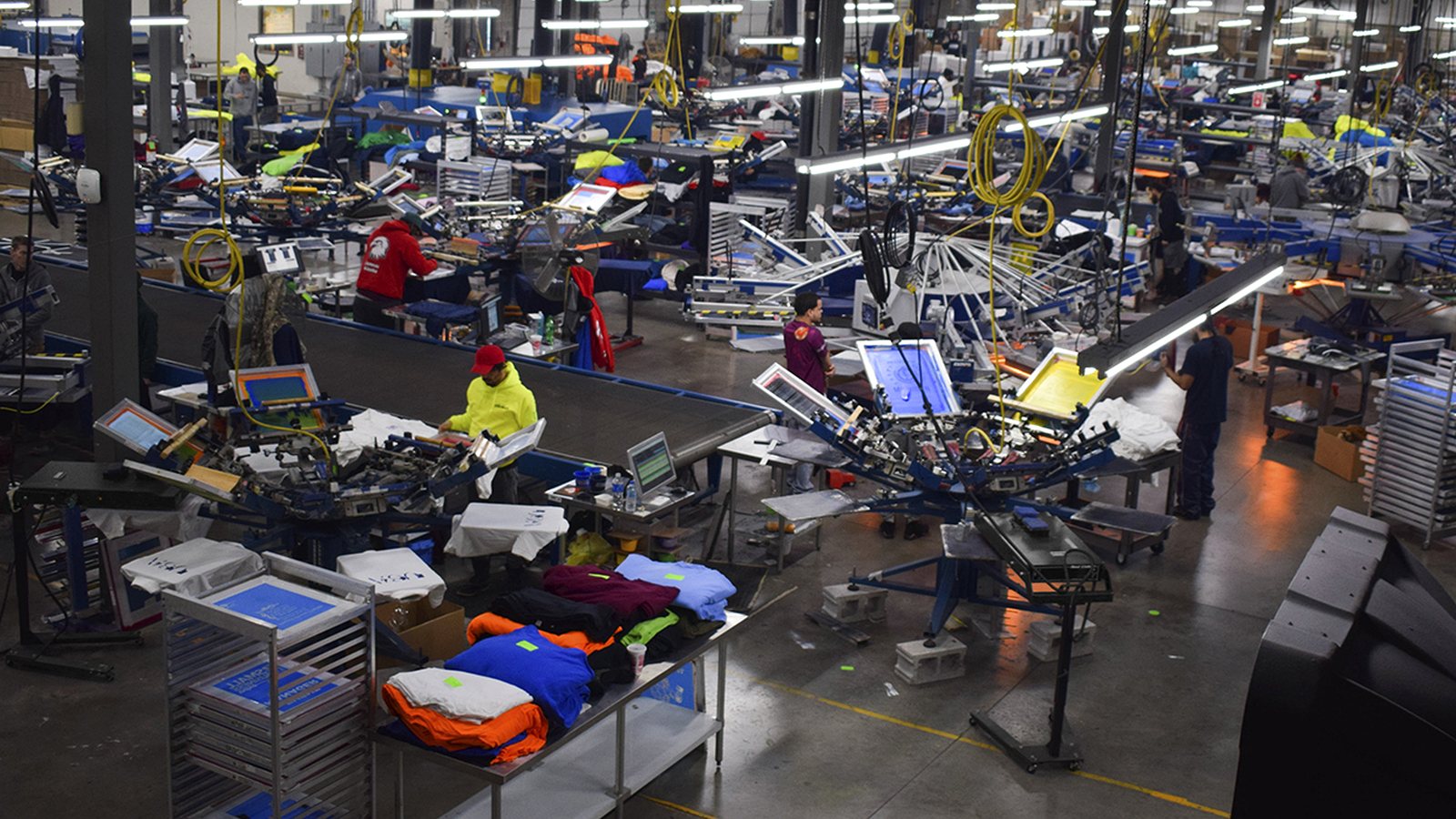
Screen printing is one of the most established t-shirt decoration methods. Ink is pushed through a prepared screen onto the garment, with each color normally requiring its own screen. That setup takes time, but it can produce strong color, excellent durability, and efficient unit costs when the same artwork is printed many times.
This method shines when the design is simple, bold, and repeatable. Event shirts, staff shirts, merch drops, sports teams, charity runs, and branded basics often use screen printing because the result is consistent and the economics improve as quantity increases. A one-color chest print or a two-color back print is exactly the kind of work screen printing handles well.
Screen printing becomes less convenient when the artwork has many colors, photographic detail, or tiny one-off variations. Every additional color adds setup complexity, and each variation can require additional preparation. That is why a highly detailed illustration may be more practical with DTG, while a clean logo for 200 shirts may be perfect for screen printing.
The feel of a screen print depends on ink type, artwork coverage, and production technique. A light water-based print can feel soft, while a heavy plastisol print can feel thicker and more graphic. Neither is automatically better. The right choice depends on whether the product should feel subtle, durable, bold, vintage, premium, or promotional.
Embroidery: premium texture for small marks
Embroidery uses thread, not ink. On t-shirts, it is best for small logos, initials, simple symbols, sleeve marks, and left-chest branding. It gives a tactile finish that can make a simple garment feel more premium. For minimal brands, clubs, personal gifts, and elevated basics, embroidery often communicates quality faster than a printed graphic.
The important word is small. Large embroidered areas can feel heavy, stiff, or uncomfortable on lightweight t-shirts. Thin lines, tiny lettering, complex gradients, and photographic designs are also poor matches for thread. The artwork has to be simplified and digitized so the stitch direction, density, and thread colors work on fabric.
Embroidery is excellent when the design is a mark rather than a picture. A monogram, icon, crest, small wordmark, or clean line symbol can look refined. On heavier garments such as hoodies, sweatshirts, caps, and fleece, embroidery can be even more effective because the fabric supports the extra texture.
Use embroidery when the customer should notice craftsmanship, not just color. Avoid it when the artwork relies on photo detail, large filled shapes, or a soft flat feel across the chest.
All-over print: when the garment is the canvas
All-over print is not a bigger version of a normal front print. It treats the whole garment as the design surface. The artwork may cover the body, sleeves, seams, or panels, creating a fashion item rather than a standard decorated shirt. Patterns, abstract art, sports graphics, vacation shirts, and bold statement pieces can all make sense as all-over designs.
This method requires different artwork planning. A normal logo dropped onto a full shirt often looks accidental. Strong all-over pieces are built with repeat patterns, generous bleed, scale testing, and realistic expectations around seams. Because fabric is cut, sewn, stretched, and worn, tiny alignment differences are part of the process.
All-over print is most useful when the visual concept depends on coverage. If the design only needs a center chest graphic, choose a standard placement. If the shirt itself should feel like the artwork, all-over print is the more natural direction.
For product pages, explain that seams and edges can vary slightly. Customers who understand the nature of all-over printing are less likely to expect impossible precision on every panel.
How fabric changes the best method
Fabric is one of the fastest ways to narrow the choice. Cotton-rich shirts are friendly to soft ink-based decoration, especially DTG. Polyester and performance blends often call for methods that handle synthetic fibers and heat behavior more predictably. Fleece and hoodies can support DTF, embroidery, and some screen printing workflows, but the pile and thickness affect detail.
Lightweight shirts need special care because heavy decoration can overpower the garment. A large transfer or dense embroidery may make the shirt feel less flexible. Heavyweight tees and hoodies can handle stronger decoration, but even then, the artwork should be balanced with the garment’s purpose.
The same design can look different on white, black, heather gray, and colored fabric. Dark garments often need an underbase or transfer layer so colors remain visible. That can affect softness and breathability. Before producing a collection, test the exact garment color and method combination that customers will receive.
How order quantity changes the best method
Quantity changes the economics. For one shirt or a small run with detailed artwork, DTG or DTF is usually more practical because there is less setup. For a larger run with a simple design, screen printing can become more cost-effective because the setup is spread across many units. Embroidery pricing depends on stitch count, placement, and complexity rather than color count alone.
This does not mean small orders are lower quality. It means the production method should reflect the order model. A print-on-demand store needs flexible methods that can handle one order at a time. A company ordering 300 event shirts can optimize for repeatability and unit cost. A boutique drop may choose a more premium finish even if it costs more because the product positioning supports it.
Before choosing, decide whether the design is a one-off gift, a small creator batch, a repeatable store product, or a high-volume event item. The same artwork can have a different best method in each scenario.
Common mistakes when comparing t-shirt printing methods
The first mistake is choosing only by price. A cheaper method can become expensive if the final product feels wrong, washes poorly, or disappoints customers. Price matters, but it should be weighed against artwork quality, garment comfort, and the product promise.
The second mistake is using the same method for every design. A custom apparel store can look more professional when it uses multiple methods intentionally. Minimal basics may use embroidery, illustrated shirts may use DTG, and bold graphic drops may use screen printing or DTF.
The third mistake is ignoring product photography and page copy. Customers cannot touch the print online, so the page should explain finish, feel, and care. A clear photo and a few honest sentences about the method reduce uncertainty. That is why this article links naturally to the companion guide on how to choose the best print technique for custom t-shirts.
The final mistake is skipping samples. A digital mockup is useful, but it cannot fully show texture, scale, or how the decoration moves on the body. Samples reveal whether the method, shirt, and artwork actually belong together.
Quick decision checklist
- Choose DTG when the artwork is detailed, tonal, or photo-led and the shirt is cotton-heavy.
- Choose DTF when the same design needs to work across cotton, blends, fleece, and performance fabrics.
- Choose screen printing when the design is bold, the color count is controlled, and the quantity is high enough to justify setup.
- Choose embroidery when the mark is small, simple, and meant to feel elevated rather than printed.
- Choose all-over print when the whole garment is the canvas, not when a normal logo has simply been enlarged.
Frequently asked questions
What is the best t-shirt printing method overall?
There is no single best method for every shirt. DTG is often best for detailed cotton artwork, DTF for crisp designs across varied fabrics, screen printing for bold repeat designs at volume, embroidery for small premium marks, and all-over print for full-garment artwork.
Is DTG or DTF better for custom t-shirts?
DTG usually feels softer on cotton and handles detailed color well. DTF is more versatile across fabrics and can produce crisp, vivid graphics. Choose based on fabric, design style, and whether softness or versatility matters more.
Is screen printing still worth using?
Yes. Screen printing remains a strong choice for bold designs, limited color palettes, and larger runs. It is less efficient for many small one-off variations, but it is excellent when the same artwork repeats across many shirts.
Can embroidery work on t-shirts?
Yes, but it works best as a small logo, wordmark, icon, or monogram. Large embroidery can feel stiff on lightweight tees, so embroidery is usually better for minimal premium details than full chest artwork.
Final recommendation
The strongest custom t-shirt products start with a simple match: design style, garment fabric, customer expectation, and production method all need to point in the same direction. When they do, the shirt feels intentional before the customer even reads the care label.
For Artsalan, that means using each method as part of the product story. Detailed art can be soft and expressive, graphic shirts can be crisp and bold, premium basics can use texture, and full-garment pieces can become wearable patterns. Method clarity is not just a production detail; it is a trust signal for shoppers and a stronger foundation for SEO.
Photo credit: Michael Nemeroff via Wikimedia Commons, CC BY-SA 4.0. Image resized for web use.